
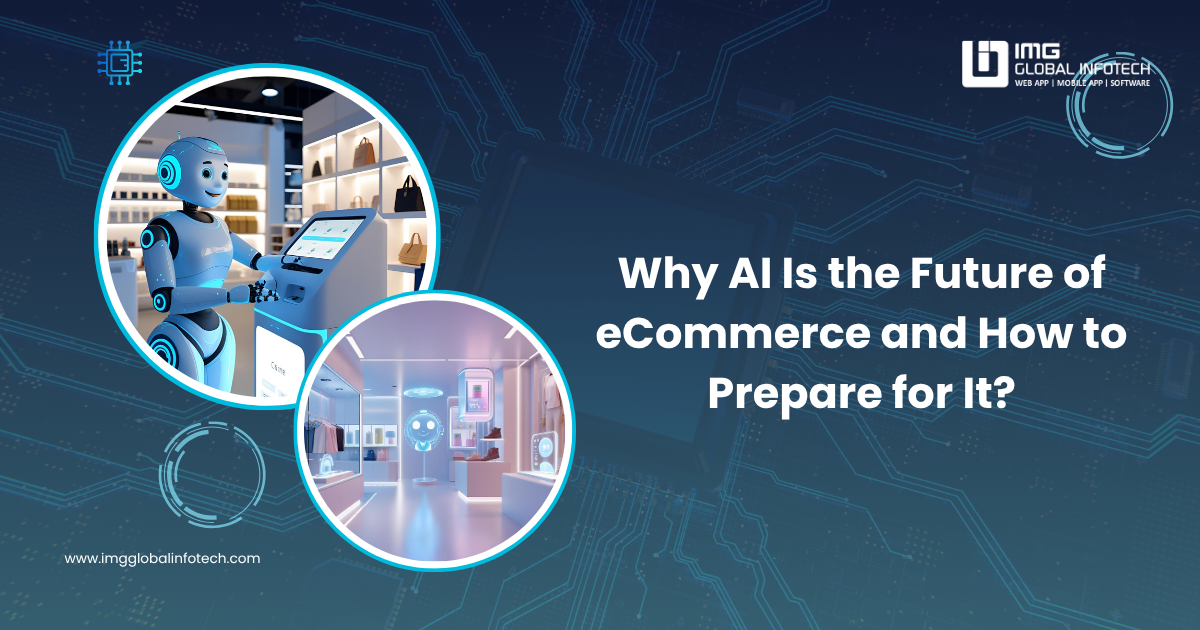
Artificial Intelligence (AI) is no longer a future concept in ecommerce—it’s a competitive advantage. From personalized product recommendations and smart search to fraud detection and predictive analytics, AI-powered online stores are transforming how brands attract, convert, and retain customers.
But how does an ecommerce website development company actually design and build an AI-driven store from the ground up? This article walks you through the strategy, technology, and development process behind creating intelligent, high-performance ecommerce platforms.
Why AI Matters in Modern Ecommerce?
Today’s shoppers expect fast, personalized, and seamless experiences. AI enables brands to go beyond static product catalogs and generic offers by delivering:
Personalized shopping journeys
Smarter product discovery
Automated customer support
Data-driven business insights
Enhanced security and fraud prevention
An ecommerce website development company leverages AI to turn your store into a dynamic, learning platform that evolves with customer behavior.
Step 1: Understanding Business Goals & Data Strategy
Before writing a single line of code, development teams focus on business objectives and data readiness. AI relies heavily on quality data, so this phase is critical.
What’s defined here:
Target audience and customer journey mapping
Personalization and automation goals
Data sources (CRM, ERP, website analytics, third-party APIs)
Compliance requirements (GDPR, PCI-DSS, data privacy laws)
This ensures that AI features align with real business outcomes, not just technical capabilities.
Step 2: Selecting the Right AI Use Cases
Not every store needs every AI feature. A professional ecommerce website development company helps brands prioritize high-impact use cases such as:
AI Product Recommendations – Suggests products based on browsing and purchase history
Smart Search & Visual Search – Helps users find products faster using keywords or images
Dynamic Pricing Engines – Adjusts prices based on demand, competition, and inventory
Chatbots & Virtual Assistants – Provides 24/7 customer support and guided selling
Fraud Detection Systems – Identifies suspicious transactions in real time
This step ensures efficient investment and measurable ROI.
Step 3: Designing an AI-Ready Architecture
AI-powered ecommerce platforms require a scalable, flexible, and secure system architecture.
Key architectural components:
Headless or Microservices Architecture for flexibility and omnichannel delivery
Cloud Infrastructure (AWS, Azure, or Google Cloud) for scalable AI processing
APIs & Data Pipelines to connect AI engines with frontend, backend, and third-party tools
Secure Data Storage & Encryption for customer and transaction data
This foundation allows AI models to process data efficiently and deliver real-time experiences.
Step 4: Data Collection, Cleaning & Model Training
AI is only as good as the data it learns from. An AI Development company focus heavily on:
Data preparation includes:
Collecting user behavior data (clicks, views, cart actions, purchases)
Cleaning and normalizing datasets
Segmenting customers based on preferences and intent
Training machine learning models using historical and real-time data
This step enables accurate predictions, recommendations, and automation.
Step 5: Integrating AI Engines & Tools
Instead of building everything from scratch, ecommerce developers often integrate proven AI platforms and frameworks.
Common technologies used:
TensorFlow / PyTorch for machine learning models
OpenAI & NLP APIs for chatbots and conversational commerce
Elasticsearch & AI Search Engines for smart search
Third-Party Recommendation Engines for faster deployment
These tools are connected to the ecommerce backend via APIs, enabling seamless AI-driven functionality across the store.
Step 6: Building Personalized Frontend Experiences
AI insights are only valuable if customers can see and feel them.
Frontend personalization features include:
Dynamic homepages based on user behavior
Personalized product listings and banners
AI-powered search suggestions
Customized checkout experiences and offers
Development teams use modern frameworks like React, Next.js, or Vue.js to deliver fast, responsive, and interactive user interfaces.
Step 7: Testing, Optimization & Performance Tuning
AI systems need continuous testing to ensure accuracy, speed, and reliability.
Testing includes:
A/B testing AI recommendations and pricing strategies
Load testing for high-traffic scenarios
Security testing for data and payment flows
UX testing for AI-driven interfaces
This phase ensures the store performs well under real-world conditions.
Step 8: Deployment, Monitoring & Continuous Learning
Once launched, AI systems don’t stop evolving. Ecommerce development companies set up:
Real-time monitoring dashboards
Performance analytics for AI features
Model retraining pipelines
User feedback loops
This allows the platform to adapt as customer behavior and market trends change.
Benefits of AI-Powered Online Stores for Brands
Partnering with an ecommerce website development company to build an AI-driven store delivers long-term advantages:
Higher conversion rates through personalized experiences
Improved customer retention with smarter engagement
Operational efficiency via automation
Better decision-making through predictive analytics
Stronger security with AI-based fraud prevention
Final Thoughts
Building an AI-powered ecommerce store isn’t just about adding smart features—it’s about creating an intelligent, data-driven ecosystem that grows with your business. From strategy and architecture to deployment and optimization, professional ecommerce website development companies in India ensures your platform is scalable, secure, and future-ready.








Write a comment ...